



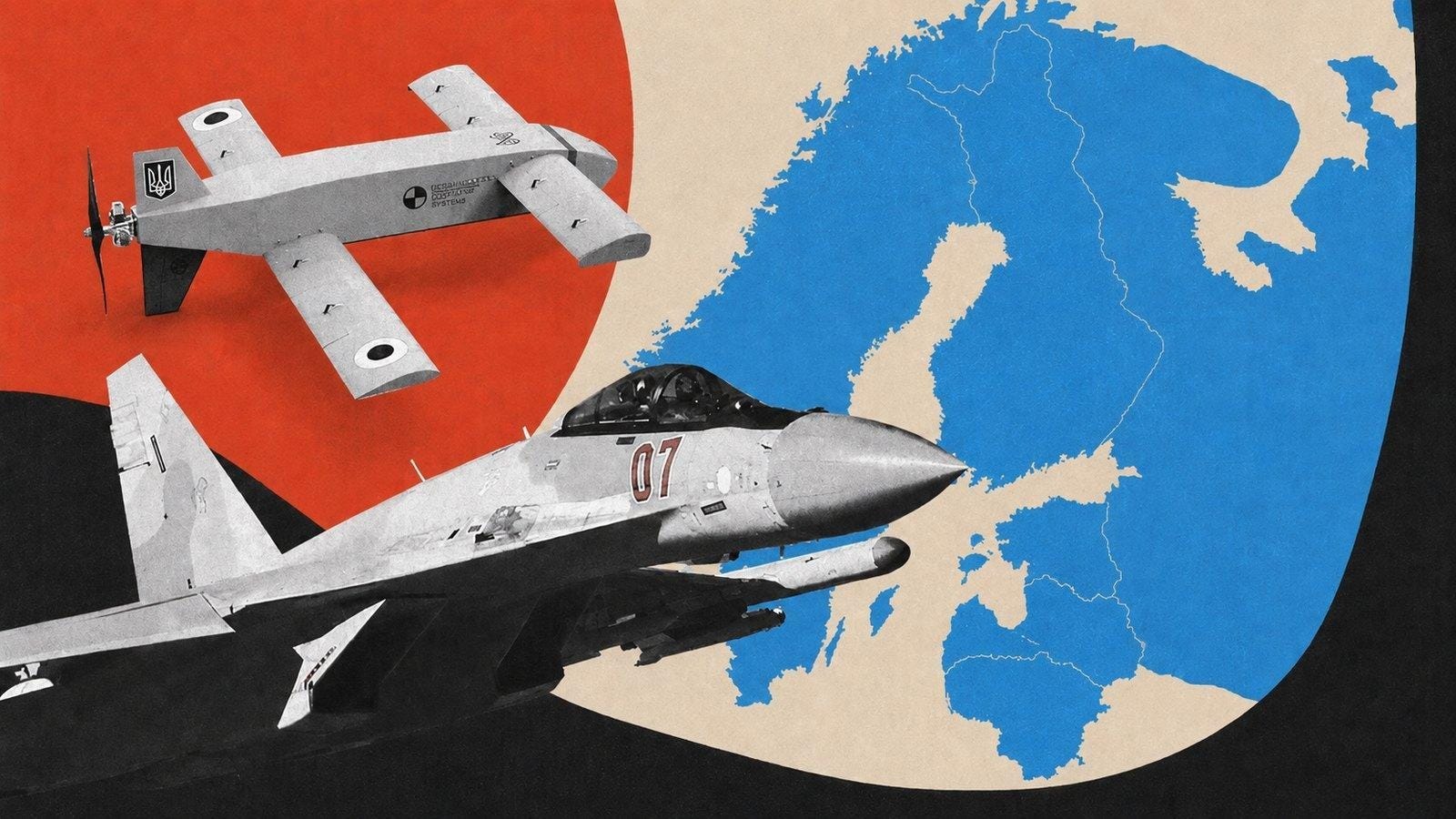
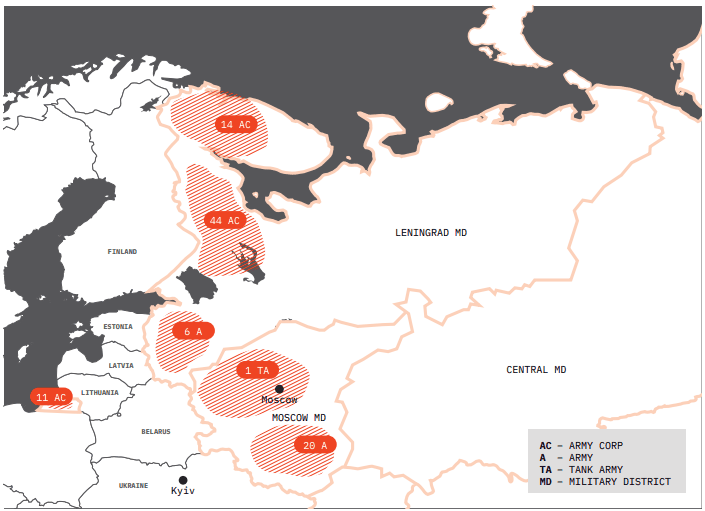
Russia’s military build-up along the borders of the Baltic states, Finland and Norway is directed by the recently re-established Leningrad Military District. Its ground component is relatively well documented. Estonia’s Foreign Intelligence Service has traced a reform intended to expand the Russian armed forces to 1.5 million personnel, which it views as preparation for a possible conflict with NATO within the next decade.
The air component is much less understood, even among close observers of Russia’s armed forces.
This Aerospace Forces formation has a formidable official title: the 6th Guards Leningrad Red Banner, Order of Zhukov Army of Air Force and Air Defence, based in St Petersburg. On 22 December 2025, Vladimir Putin awarded it the honorary title of “Guards” - a Soviet-era distinction for battlefield success.
The decree used the standard formula, praising heroism ‘in combat actions to defend the Fatherland and the interests of the state in conditions of armed conflicts’. The regional broadcaster in Leningrad Oblast, the territory surrounding St Petersburg, was more explicit. Reporting the governor’s thanks, it said the distinction recognised the army’s role in repelling Ukrainian drone attacks on the region.
Why the Leningrad Military District Returned
On 26 February 2024, Putin signed a decree abolishing the Western Military District and restoring the Moscow and Leningrad military districts, both of which had previously existed until 2010. The change took effect on 1 March. Russian officials linked it directly to Finland’s accession to NATO in 2023 and Sweden’s then-imminent membership.
Nordic analysts reached the same conclusion, and went even further. In the most detailed published study of the new military district, Juha Kukkola of Finland’s National Defence University argues that its restoration shows Russia’s leadership regards a land war in the north-western theatre - local, regional or large-scale - as possible from the 2030s onwards. The Swedish Defence Research Agency likewise sees the change as preparation for a larger force in north-western Russia and a return to more centralised command.
Yet the new military district has no air and air defence forces under its direct command.
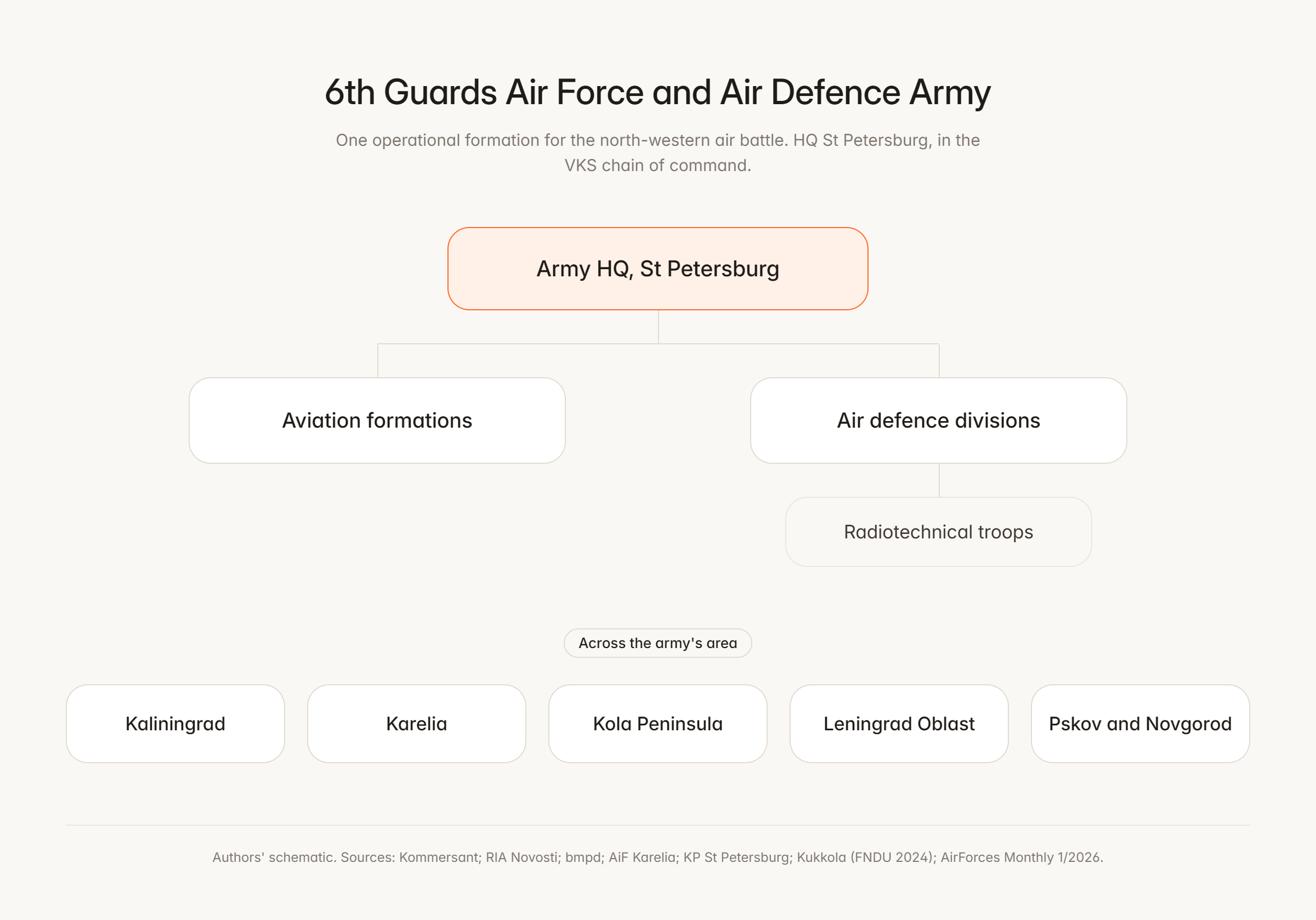
Aviation and ground-based air defence were removed from the military districts in the 2024 reform and placed directly under the Aerospace Forces, or VKS, in Moscow. The 6th Guards Air Force and Air Defence Army therefore protects the district’s airspace without directly subordinated under the district itself. In practice, the army’s area of responsibility extends from Kola Peninsula in the North to the borders of Estonia and Latvia in the South and includes also the Kaliningrad enclave on the coast of the Baltic Sea, broadly matching the ground force theatre as mapped by Estonian intelligence.
What an Air Force and Air Defence Army Does
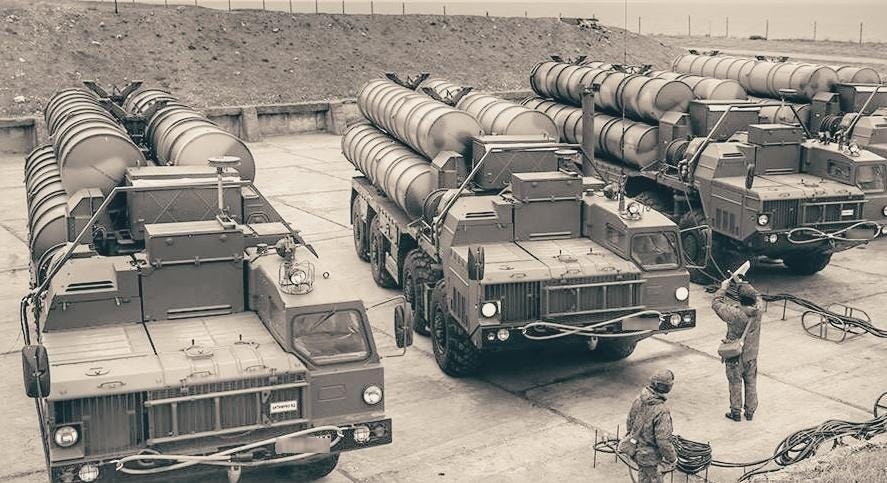
The name is literal. An air force and air defence army (армия ВВС и ПВО) controls almost every asset that fights within its assigned airspace: aviation formations, army aviation helicopters, surface-to-air missile divisions equipped with systems including the long-range S-400, and the radar units that build the air picture on which the system depends. As described in a January 2026 AirForces Monthly survey of Russia’s reforms, a single headquarters coordinates air combat over the St Petersburg, the Leningrad, Pskov and Novgorod regions, and Karelia.
The 2024 reforms expanded the reach of the formation. In Kaliningrad, Russia’s Baltic exclave, the 689th Guards Fighter Aviation Regiment at Chkalovsk transferred from the Baltic Fleet to the 6th Guard’s Air Force and Air Defence Army. Its aircraft were repainted, replacing naval markings with ‘VKS Rossii’. Regional media say the regiment patrols Russia’s air borders and flies missions in the war against Ukraine.
In Karelia, beside Finland, Petrozavodsk officials received the commander of what regional reports called the newly deployed 149th Composite Aviation Division in April 2025, as the Karelian Republic prepared to host a new army corps. Russia’s defence ministry has not yet confirmed where the division is placed within the 6th Guards Air Force and Air Defence Army’s formal structure. Fighter aviation is already established as part of the formation: the 159th Guards Fighter Aviation Regiment at Besovets, outside Petrozavodsk, marked its 85th anniversary in May 2025, with official speeches citing its service in the war.
Unification Under a Single Command
Until recently, north-western Russia had two such armies. The other was the Northern Fleet’s 45th Air Force and Air Defence Army, based near Murmansk at Severomorsk and responsible for the Arctic approaches.
It ceased to exist in 2023. That December, Izvestia reported that a new Composite Aviation Corps of the Northern Fleet had been formed ‘on the basis of the 45th Air Force and Air Defence Army’ . A corps ranks below an army. The fleet retained its aircraft in the new formation, while the 45th Army’s ground-based air-defence units passed to the 6th Guards Air Force and Air Defence Army, according to AirForces Monthly.
The 6th thus became the only army of its kind in Russia’s north-west.
The change was easy to overlook - and even specialists did so. After Lieutenant-General Alexander Otroshchenko, commander of the new corps, was killed in the crash of an An-26 transport aircraft in Crimea at the end of March 2026, early wire reports described him as commander of the ‘45th Army of the Northern Fleet’s Air Force and Air Defence’ - a formation that had been gone for more than two years. Interfax, quoting Murmansk’s governor, used the correct title, and the syndicated copy was later amended.
The Ongoing Struggle Against Drones
In March 2026, Ukrainian long-range drones set fuel tanks ablaze at Primorsk, Russia’s largest Baltic oil terminal, and halted exports at both Primorsk and Ust-Luga. Satellite imagery later reviewed by Reuters indicated that at least 40 per cent of Primorsk’s storage capacity and about a quarter of Ust-Luga’s petroleum-product tanks had been damaged.
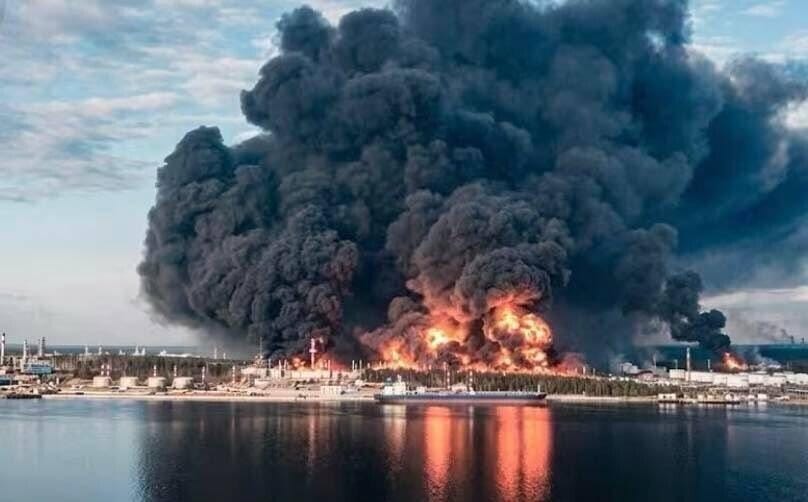
In April, Leningrad Oblast’s governor, Alexander Drozdenko, told the regional parliament that the territory had become ‘not only a border region but a frontline one’. The number of drones reportedly downed over the region by that point varies by source. Fontanka put the first-quarter total at 243; TASS’s English service reported 343 from the same speech. Neither figure can be independently verified.
Drozdenko has attempted to put together a concrete programme for protection of infrastructure. It included seven reinforced-concrete observation towers in the Kirishi and Kingisepp districts, costing 855 million roubles - about $11 million - as well as 80 mobile air-defence teams already operating and another 54 which were due by 1 June 2026.
The army designed to confront NATO air power in the north has spent the past year defending oil terminals from Ukrainian attacks.
The most intense single day came on 6 June. RBC followed the regional tally through a morning-long alert to a final count of 144 drones reportedly downed over the oblast. A fire broke out at a defence ministry site near Bolshaya Izhora, and more than 600 residents were evacuated.
An additional 65 mobile fire groups, involving 298 people, are being formed in the region to be operational by 1 August. Komsomolskaya Pravda described them as the last line of defence for critical infrastructure: small teams of reservists using specially equipped pick-up trucks and receiving a bounty of up to 100,000 roubles (about $1290) for each drone they shoot down.
The volunteers sign reservist contracts with the defence ministry, while the regional budget pays for vehicles, equipment and communications. The chain of command leads upward: the groups ‘work under the leadership of the 6th Guards Army of Air Force and Air Defence’ . RBC reported the same arrangement in April, adding that the companies whose facilities are protected also help finance the equipment.
Concluding Thoughts
The counter-drone campaign has become central to the way Russia presents the 6th Guards Air Force and Air Defence Army. The decree granting Guards status is vague, but the governor’s public praise, the fire groups under the army’s direction and the bounty scheme all connect its current identity to the defence of Leningrad Oblast.
Its original mission has not disappeared. Juha Kukkola argues that the north-west’s air defence posture is an important measure of how seriously Russia’s armed forces judge the risk of attack from the north-western direction. Its importance increased when Finland and Sweden joined NATO.
Our assessment is that the drone war has extended the army’s founding principle of unified command for the whole region’s air combat down to the lowest level. A formation built around S-400 missile regiments and aviation formations now also directs observation towers and reservist anti-air teams. That low-altitude layer would count for little in the opening phase of a larger war, when the threat overhead is strike aviation and cruise missiles. The two jobs need different equipment and do not draw on the same supplies, so the main cost of the drone war to the army is command attention and trained reservist crews.
Finland’s first F-35s are due to arrive at Lapland Air Wing this autumn. Kukkola expects the Leningrad Military District’s new units and infrastructure to be ready no earlier than the start of the 2030s, subject to one important condition: as long as the war in Ukraine continues at its present intensity, development in the north-west will remain slow. The clearest evidence of whether the 6th Guards Air Force and Air Defence Army is overcoming its current disadvantages will come in small, verifiable steps - official confirmation from the defence ministry that the 149th Division belongs to it, and, after the war, which regiments will return to strengthen the northwestern direction. ֍

This is an excellent overview of the organizational evolution of Russia's 6th Guards Air Force and Air Defense Army. However, the article makes one serious strategic omission. The authors present the army's focus on countering Ukrainian drones as a departure from its original mission of preparing for a conflict with NATO. In reality, these missions are not separate.
Ukraine is not operating in isolation. The drones may be launched by Ukrainian forces but the broader targeting architecture including intelligence, surveillance, reconnaissance, satellite support and much of the operational planning is widely understood to rely heavily on NATO support. Ukraine does not possess the sophisticated ISR capabilities to prepare and execute such operations on its own. In that sense, the drone campaign represents another dimension of the same confrontation with NATO rather than a distraction from it.
This distinction is important because it changes how one interprets the adaptation of the 6th Guards Army. Rather than abandoning its original purpose, it is evolving to confront a new form of NATO-enabled warfare. The challenge is no longer limited to defending against Western aircraft and cruise missiles. It now includes defeating long-range, low-cost unmanned systems operating within a broader intelligence network.
As such, the counter-drone campaign is not evidence that the army has shifted away from its core mission. It is evidence that the character of that mission has changed. The 6th Guards Air Force and Air Defense Army is still defending Russia's northwestern strategic direction against what Moscow sees as the NATO threat. It is simply doing so against a different set of capabilities than those envisioned during the Cold War.
Excellent detailed article. Very much appreciated 👍