


By Andreas Turunen
Mellenion
If only tactical and operational factors are considered, simulation or scenario-based research into a war between NATO and Russia is relatively straightforward. In purely military terms, Russia does not possess the means to sustain such a conflict without risking defeat in a confrontation with a technologically and numerically superior NATO alliance.
Wars, however, are primarily fought at the strategic and political levels. They cannot be reduced to a contest of one weapon against another, because weapons are not used in a political vacuum, separate from the existing reality of relations between states.
Accordingly, the weapons used in armed conflict are always subordinate to political, legal, relational and escalation management concerns. Not very long ago, Ukraine faced constant restraint and limitations imposed by its partners. Those limitations concerned both certain types of weapons and whether they could be used against targets inside the borders of Russia.
In a hypothetical conflict between NATO and Russia, there is a considerable chance that participating Western countries would impose different restrictions and so-called sanctuary policies, limiting the use of certain weapon systems and strikes against certain targets inside Russia. These policies are important to address because their nature and effects can be assessed well before armed conflict begins.
The primary question, then, is this: how can NATO states impose the fewest possible restrictions on their military decision-makers so as to ensure the maximum operational and tactical effectiveness of their national militaries while limiting the risk of uncontrolled escalation?
Limitations on the Use of Military Capabilities
The role of escalation management in a conflict is to avoid a situation in which the war spins out of control on either side. This means that both sides impose limitations on themselves in how they fight and conduct combat operations.
In a war between NATO and Russia, the greatest limitations on NATO’s operational conduct would stem from internal structural issues, all linked to escalation management. Three are especially salient.
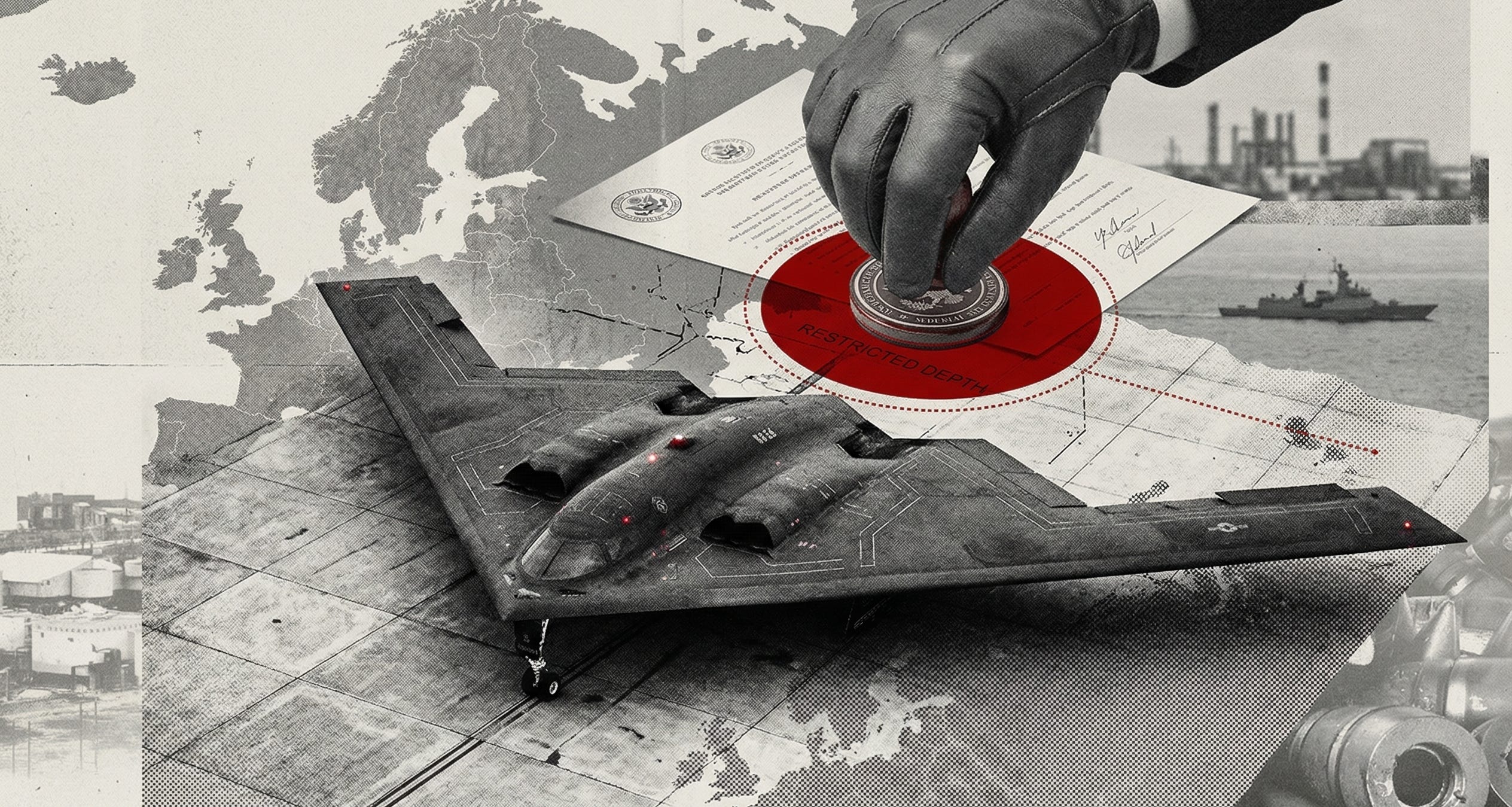
The first is depth limitations. In selecting targets inside Russia, political pressure could limit strikes to a certain depth. Airfields, logistic hubs, repair facilities and command centres beyond a certain distance from NATO borders might therefore be excluded.
The second is politically sensitive targets. Certain targets, such as components of the Russian nuclear triad, could be considered politically too sensitive and efforts to degrade them too escalatory. This could lead to certain elements of the Russian Long-Range Aviation, as well as specific basing areas of the Northern Fleet, being excluded from target lists.
The third is limitations on the use of weapons systems. There is a credible risk that supplying states would not permit certain weapon systems to be used to their full capacity because of escalation concerns.
These hypothetical examples show how strategic and political considerations can constrain operational and tactical dynamics, making the conduct of operations, planning and combat actions less effective.
The Rationale Behind Self-Imposed Restrictions
What might tempt Western political and strategic decision-makers to impose restrictions on their own military capabilities? The answer lies in Russia’s nuclear capabilities.
The rationale for imposing restrictions on certain combat capabilities stems from Russia’s ability to maintain credible nuclear deterrence against Western countries. During peacetime, Russia maintains a strategic deterrence system that it constantly updates and adjusts on the basis of its perceptions and internal calculations about how the global military-political situation is evolving. It also continuously evaluates Western military potential relative to its Armed Forces in a possible conflict situation.
In a war between NATO and Russia, one of the most important goals for Western decision-makers would be to keep the conflict managed and below the threshold for the use of nuclear weapons. The necessity of escalation management means that combat would have to be constrained geographically, economically and politically.
This would introduce several dilemmas for NATO because regional perspectives differ. Countries in Eastern Europe, such as Poland or the Baltic states, would view attempts at conflict resolution as possible appeasement of Russia, allowing Russia to advance its interests through the threat of nuclear use. If NATO members were to make compromises in response to nuclear threats, the alliance would be placed in an increasingly weak position, with Russia able to increase its demands each time those demands were met.
At the same time, it would be necessary for NATO as a whole to keep the conflict at a managed level and to prevent uncontrolled escalation into a large-scale nuclear war. That makes some form of arbitration and communication necessary, creating possible avenues for compromise and settlement.
Concluding Thoughts
Across different scenarios involving a hypothetical war between NATO and Russia, the primary problem is not Russia’s combat capability but the risk of imposing too far-reaching restrictions on the use of military force and thereby limiting warfighters’ ability to achieve combat success.
The key point is that even if NATO holds significant advantages in military capabilities, especially in the aerospace and maritime domains, the necessity of escalation management and self-imposed restrictions might prevent those capabilities from being used to their full extent. The correlation of forces could therefore be far more balanced between Russia and NATO than the mere number of available capabilities suggests.
What, then, could be a solution for maximising the effectiveness of NATO’s armed forces in a hypothetical conflict? A possible answer would be to increase tolerance for risk and challenge Russian nuclear threats, matching the level of Russian threats and refusing to give in to Russian demands. The calibration of NATO military operations to be effective while managing escalation, requires rigorous research on Russian policies related to strategic and nuclear deterrence. The balancing act requires deft strategic analysis and significant willpower from US and NATO decision-makers on military operations and nuclear deterrence policy. ֍
