


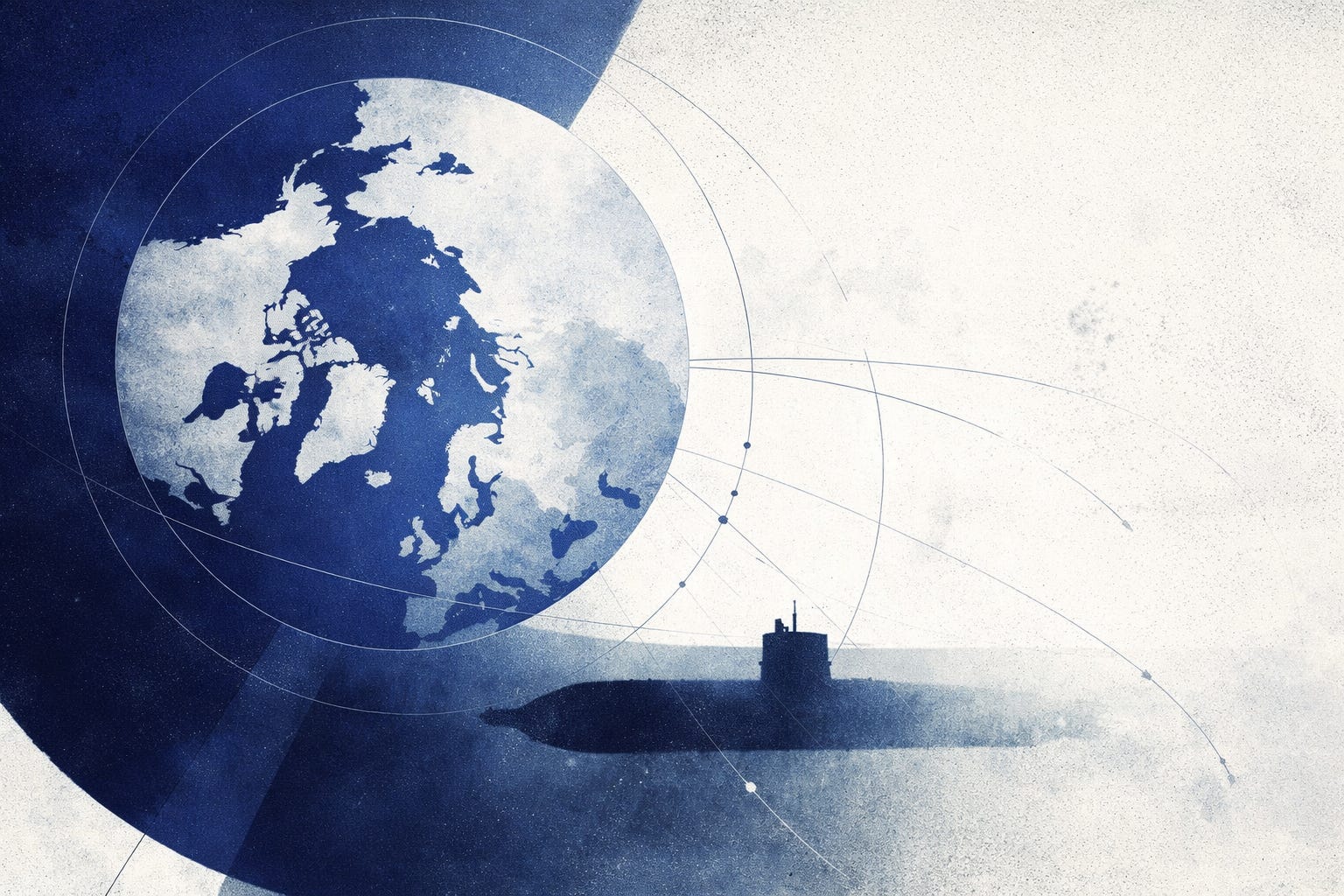
Cold Response 26 and Russia’s response suggest a pattern of managed military competition in the High North rather than an escalation in the near future. The scale of the NATO exercise is significant, while Russia has limited capacity to respond in a comparable manner while the war in Ukraine continues. Russian military activities have been concentrated in the maritime domain.
NATO members have convened for their Arctic exercise, Cold Response 26, between March 9 and 20. One of the key objectives of the exercise is to train the transport of troops from Sweden to Finland in the context of NATO FLF (Forward Land Forces) in Finland. This is an integral part of NATO’s deterrence and defence in the High North. The exercise includes more than 30,000 personnel from 14 countries training on the territory of Finland and Norway.
Russian military activities during Cold Response 26 should be interpreted in the context of Russia’s strategic deterrence system, which is primarily intended to deter the use of military force against Russia. Its second purpose is to dissuade the military-political leadership of adversarial countries from taking steps considered detrimental to Russian interests. During Cold Response 26, Russia appears to have sought to demonstrate its ability to defend its interests in the Arctic. In official and media messaging, this is linked to claims that Russia’s position in the region is under pressure.
Russia’s Narrative on the Exercise
Russian narratives primarily concern the increasing militarisation of the Arctic and the efforts of the United States to secure a strategic advantage in the region. As usual, Russian officials and media present the exercise as preparation for a possible confrontation with Russia in the Arctic.
The principal point of contention in these statements reflects Russian threat perceptions concerning control of the Northern Sea Route. The United States disputes complete Russian control over the Northern Sea Route and regards the route as an international shipping route, whereas Russia considers it a national maritime corridor under Russian jurisdiction.
The Russian Foreign Ministry offered limited comment, stating that NATO has “been considering hypothetical scenarios for a conflict with [Russia] in the Arctic for a long time”. In doing so, the Russian MFA appeared to downplay the significance of the ongoing NATO exercise.
On Russia Today, the exercises are framed in connection with the United States’ intention to gain control over international logistical routes and chokepoints, emphasised particularly in relation to the Northern Sea Route.
The Russian state newspaper Gazeta.ru frames the exercises in the context of competition for the Arctic, claiming that the United States and European members of NATO are seeking to declare the Arctic a “common area”, thereby allowing freedom for international use, and are demanding the internationalisation of the Northern Sea Route, limiting Russia’s rights to control the maritime territories.
Russia’s Naval Response in the Barents and Norwegian Seas
Based on public information, Russian military activities and exercises during the Cold Response exercise have been limited and measured. Russia does not appear to be seeking an escalation of tensions. Instead, it is demonstrating a range of capabilities in the Barents Sea, and its resolve, in a calibrated manner. In the weeks before the exercise, Russia conducted several routine military activities.
On February 24–26, Russia announced a Notice to Airmen (NOTAM) linked to missile exercises in the Barents Sea, in international waters though partly inside the Norwegian Exclusive Economic Zone. Russia often issues such warnings without actual missile launches or live-firing exercises taking place, and in this case the missile launch was not confirmed.
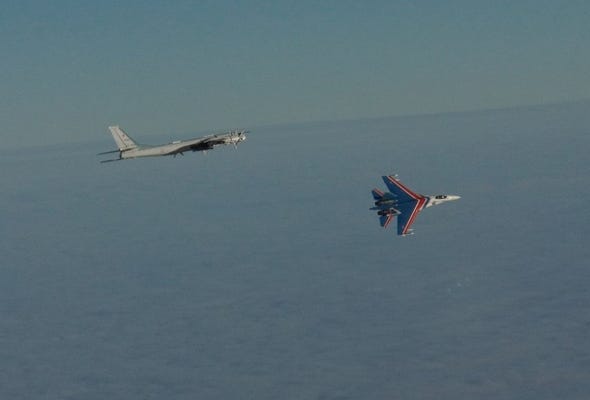
On February 27, the Norwegian Air Force intercepted a routine patrol flight of Russian Tu-95 bombers and two Su-35 fighters over the Barents Sea in the Arctic Ocean. The Tu-95s are part of the Russian Long-Range Aviation, and these routine flights form part of the Russian strategic deterrence system, aimed at reminding NATO countries of Russia’s nuclear and force-projection capabilities.
Interestingly, the Su-35 fighters carried the colour scheme of the Russkie Vityazi, the Russian Air Force’s aerobatic demonstration team. These aircraft appear to have been repurposed for operational use.
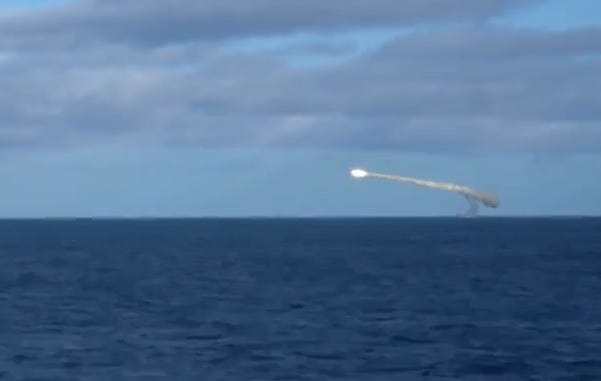
On 10 March, at the beginning of the Cold Response 26 exercise, Russia announced another missile exercise and issued a NOTAM warning for the period from 11 to 13 March, indicating a missile launch in the Barents Sea near Norway.
This missile launch actually took place and was Russia’s most significant demonstration of capability during Cold Response 26. According to information published by the Russian Ministry of Defence, on 12 March the Yasen-class nuclear attack submarine “Kazan” of the Northern Fleet launched an Oniks anti-ship missile from a submerged position at a target 300 km away. During the exercise, this appeared to be the most concrete public demonstration of Russia’s maritime strike capability.
Other routine military activities included an Il-20M reconnaissance aircraft flying near and inside the announced Cold Response exercise area on several occasions on 10 and 11 March. In both cases, Norwegian fighter jets intercepted the Russian reconnaissance aircraft. On 11 March, the Il-20 flew for several hours over the Norwegian Sea inside the announced zone of the NATO exercise.
The Northern Fleet also conducted anti-submarine exercises in the Barents Sea. According to Interfax, Ka-27M helicopters practiced search and detection of submarines and simulated torpedo attacks against a notional enemy submarine, with one of the Northern Fleet’s nuclear submarines acting as the opposing force. Separately, another report stated that the frigate Admiral Golovko conducted anti-submarine drills using its sonar system and carried out a live torpedo launch against a submarine target.
Concluding thoughts
During the Cold Response exercise, Russia’s primary intention appears to have been to demonstrate a range of naval capabilities, including anti-ship missile launches, anti-submarine warfare capabilities and reconnaissance activity. Taken together, these measures were most likely intended to signal Russian readiness and resolve in Arctic conditions. In that sense, Moscow’s response was less about matching NATO exercise activity than about reminding observers that it retains credible military reach in the maritime domain of the High North.
At the same time, based on publicly available information, Russia appears to view the exercise as manageable rather than acutely threatening. Its activities and rhetoric can be characterised as limited and measured. The military actions were framed as routine exercises, and official communications did not strongly emphasise a direct connection to Cold Response or to an immediate NATO threat. Russia has chosen to signal presence and capability, but not to frame the Cold Response 26 exercise as an escalatory step.
The character of the response also suggests a degree of calibration. Russia’s response remained focused on a relatively narrow set of naval and air capabilities. If Moscow had regarded Cold Response as more threatening, it would likely have demonstrated a broader range of capabilities and adopted a more confrontational signaling posture. Instead, the response appears to have been designed to communicate readiness and resolve in a limited way.
This pattern also reflects the nature of the exercise itself. Cold Response is primarily land-oriented, whereas Russia currently has limited capacity to stage large-scale ground exercises on a comparable scale because of the manpower and material demands of the war in Ukraine. This might be why Russia has chosen to downplay the significance of the exercise. As long as the war in Ukraine continues, Russia’s capacity to organize large-scale exercises in the High North will likely remain limited.