


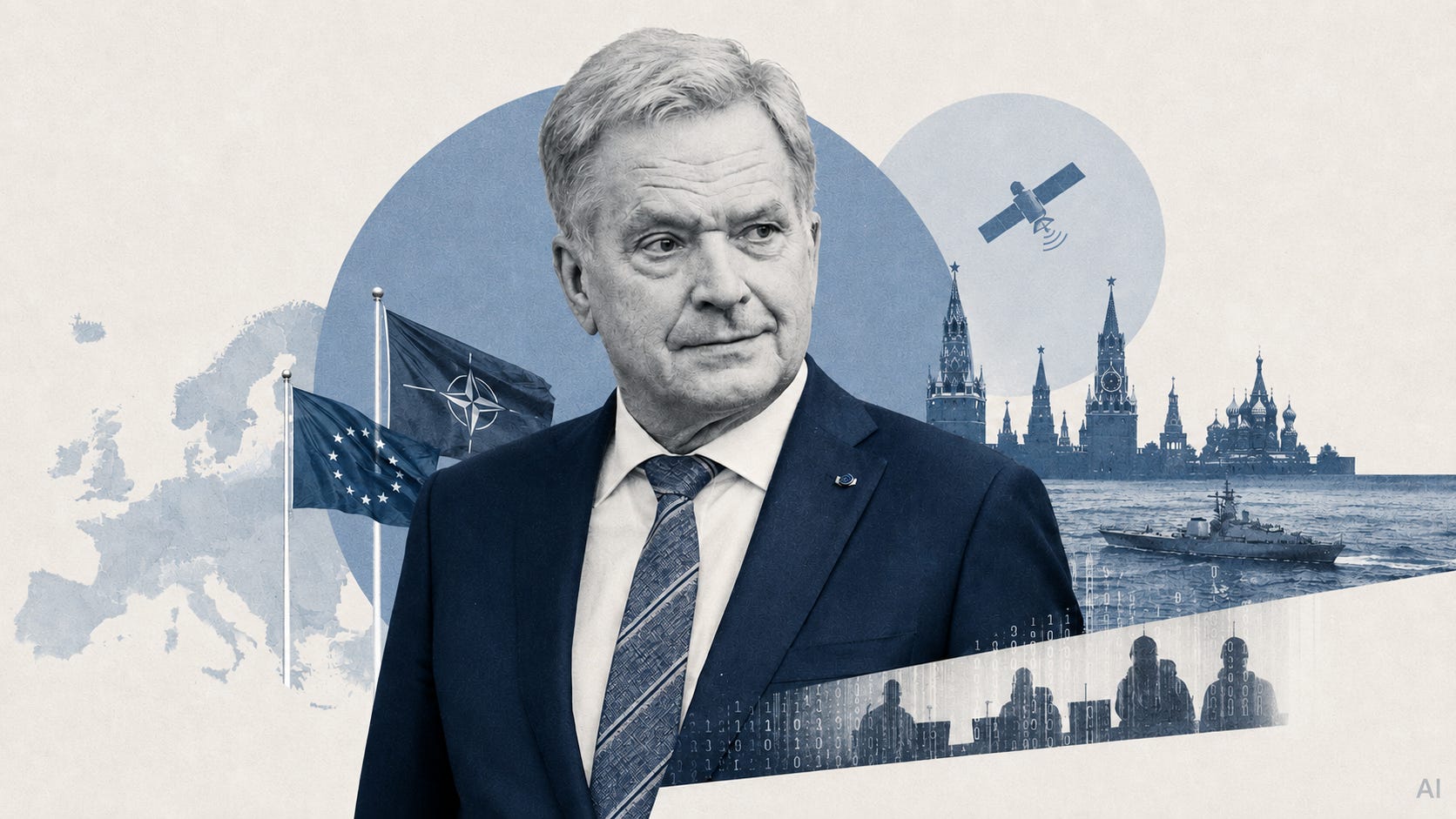
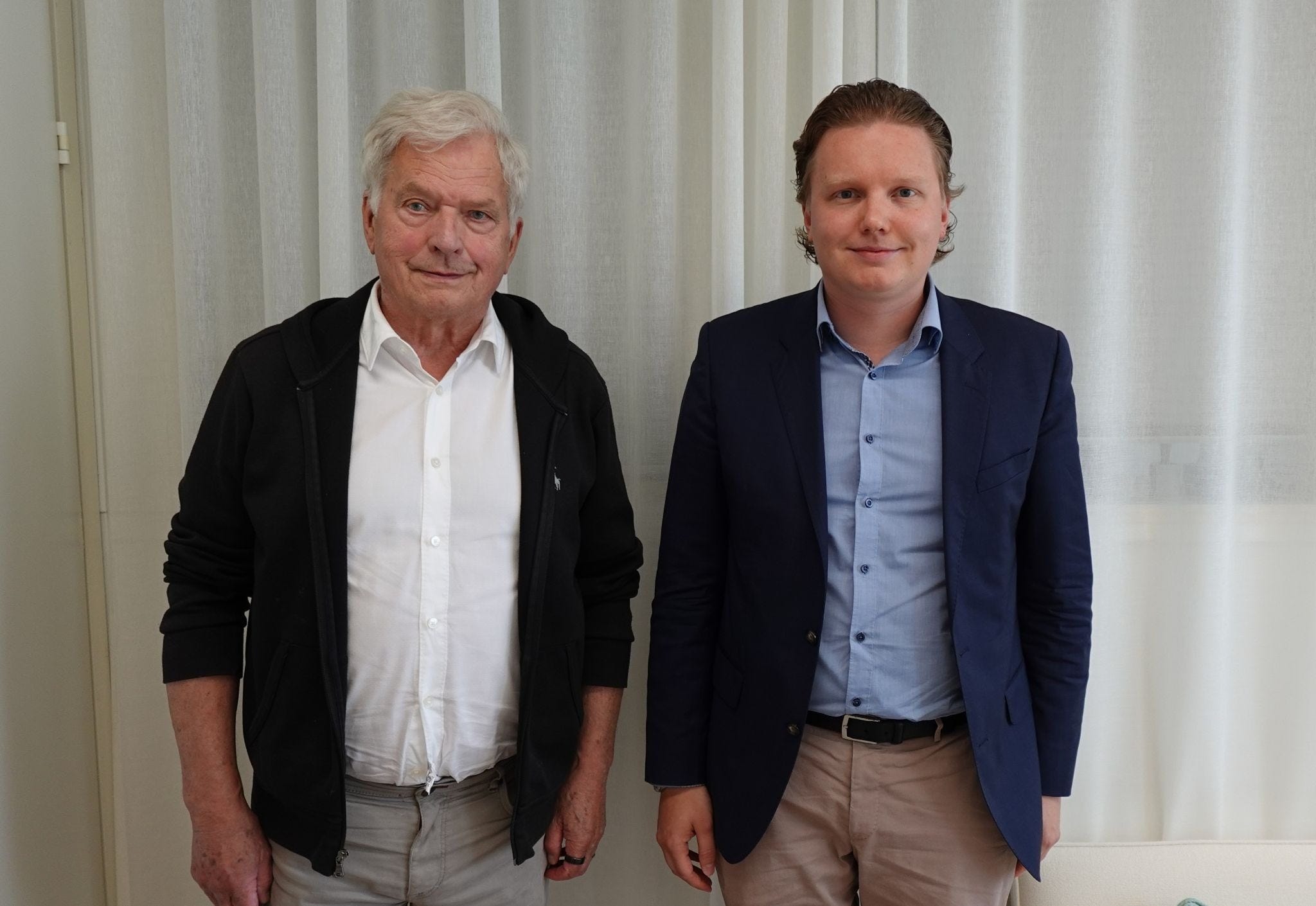
I had the opportunity to meet Finland’s former president Sauli Niinistö on Thursday 13 August and exchange views with him on topical issues in European security. During the meeting, we discussed the current trajectory of strained relations between Russia and the West, the risk of conflict between Europe and Russia, Russia’s long-term strategy in Ukraine, and the strengthening of European deterrence.
A direct NATO-Russia conflict may remain unlikely even as confrontation becomes harder to control. The discussion instead points to the hybrid sphere, where Europe faces legal and capability asymmetries and where agreed rules for managing escalation are lacking. Against this background, Niinistö sees stronger European capabilities and dialogue with Putin, involving the United States, as necessary elements of escalation management.
Unlikely conflict, but high tensions
In President Niinistö’s view, a direct conventional conflict between Russia and NATO is unlikely. For Russia, directly challenging NATO in an open conflict would offer little strategic advantage. If Russia nevertheless seeks to sustain a confrontational posture towards the West, it is more likely to pursue that competition through other means.
The more concerning scenario, in President Niinistö’s view, is an intensifying confrontation in the hybrid sphere. Even if the West and NATO maintain a stronger conventional military position relative to Russia, the asymmetry in deterrence creates an avenue for Russia to avoid direct conflict and employ instruments of hybrid confrontation.
A direct NATO-Russia conflict may remain unlikely even as confrontation becomes harder to control.
Such confrontation is difficult to manage partly because it involves unlawful and criminal means, while European states remain constrained by their own legal frameworks. Such methods may include proxies and criminal actors, as well as less predictable tools emerging from advances in artificial intelligence and quantum technology.
By contrast, President Niinistö considers it unlikely that Russia would test NATO’s Article 5. Such hesitation would reflect a calculation of risk. As long as NATO appears strong and credible, testing Article 5 through an armed intrusion would be a high-risk way of probing the cohesion of the alliance.
The caveat is that this deterrent effect depends on NATO remaining strong and credible. That credibility is not self-sustaining and requires active maintenance.
NATO needs a European pillar
Credibility also depends on the visibility of allied strength. In Niinistö’s view, Russia tends to underestimate its opponents, making it important that its political leadership recognises Europe’s capabilities and determination. Hence, European and NATO strength must not only exist but also be visible and credible from Russia’s perspective.
That credibility is also closely linked to the United States’ commitment to European defence and security. President Niinistö sees a degree of unpredictability in US decision-making. President Trump’s comments have affected the Alliance’s credibility, but the uncertainty extends beyond the short term. Strategic competition between China and the United States may also shift US attention away from Europe.
Despite this short- and long-term uncertainty, President Niinistö considers a full US withdrawal from Europe unlikely. The possibility should nevertheless be taken into account.
This uncertainty strengthens the case for developing a European pillar within NATO. In Niinistö’s view, such a pillar should be fully compatible with NATO while also being capable of operating independently if necessary. The main challenge for European defence is not necessarily a lack of funding, but the absence of structures that would allow available resources to be used effectively.
In considering French and British nuclear deterrence within such a pillar, Niinistö regards the French nuclear initiative positively because it helps present Europe as a strong actor. He nevertheless argues that European deterrence should rely more heavily on conventional missile capabilities. Alongside nuclear and conventional deterrence, Europe’s lack of hybrid capabilities and of a credible capacity to respond in the hybrid sphere remains a concern.
Russia’s strategic calculation
The discussion portrays Putin’s strategic approach as comparatively fixed once a course has been chosen. In Niinistö’s chess metaphor, the plan is followed to a decisive endpoint even if the final outcome remains uncertain. The same logic applies to the war in Ukraine, where Putin has gone all in, staking his own position as well.
At the same time, the discussion suggests an opportunistic element in Putin’s decision-making. When discussing why Russia ultimately decided to launch a full-scale offensive against Ukraine, Niinistö points to Putin’s sense that he had been deceived by the West and to Russian disappointment with the Minsk agreements.
Taken together, these observations suggest that Russia’s strategic course may be difficult to alter through short-term pressure alone, while Putin’s central role remains important for any effort to manage escalation.
He also suggests that Putin decided to act when the moment appeared favourable, with perceived weakness in the West forming part of that calculation. The events of 6 January at the US Capitol and the withdrawal from Afghanistan are discussed as possible signals of such weakness, with Niinistö viewing the latter as a possible reinforcing factor.
Against this background, the discussion considers whether Ukraine’s long-range drone campaign could pressure Russia into negotiations by bringing the effects of the war more directly into Russian society. Niinistö remains cautious, questioning whether such pressure would actually change Russian attitudes.
A further obstacle to changing Russia’s course lies in the legal and symbolic status Russia has given to the annexed territories. Niinistö argues that incorporating these territories into Russia’s constitutional framework raises the threshold for later concessions, as reversing their status would be difficult to accept domestically. The discussion also raises the possibility that annexation could provide a legal basis for a formal declaration of war if Ukraine attempted to retake the territories. Niinistö considers this idea plausible.
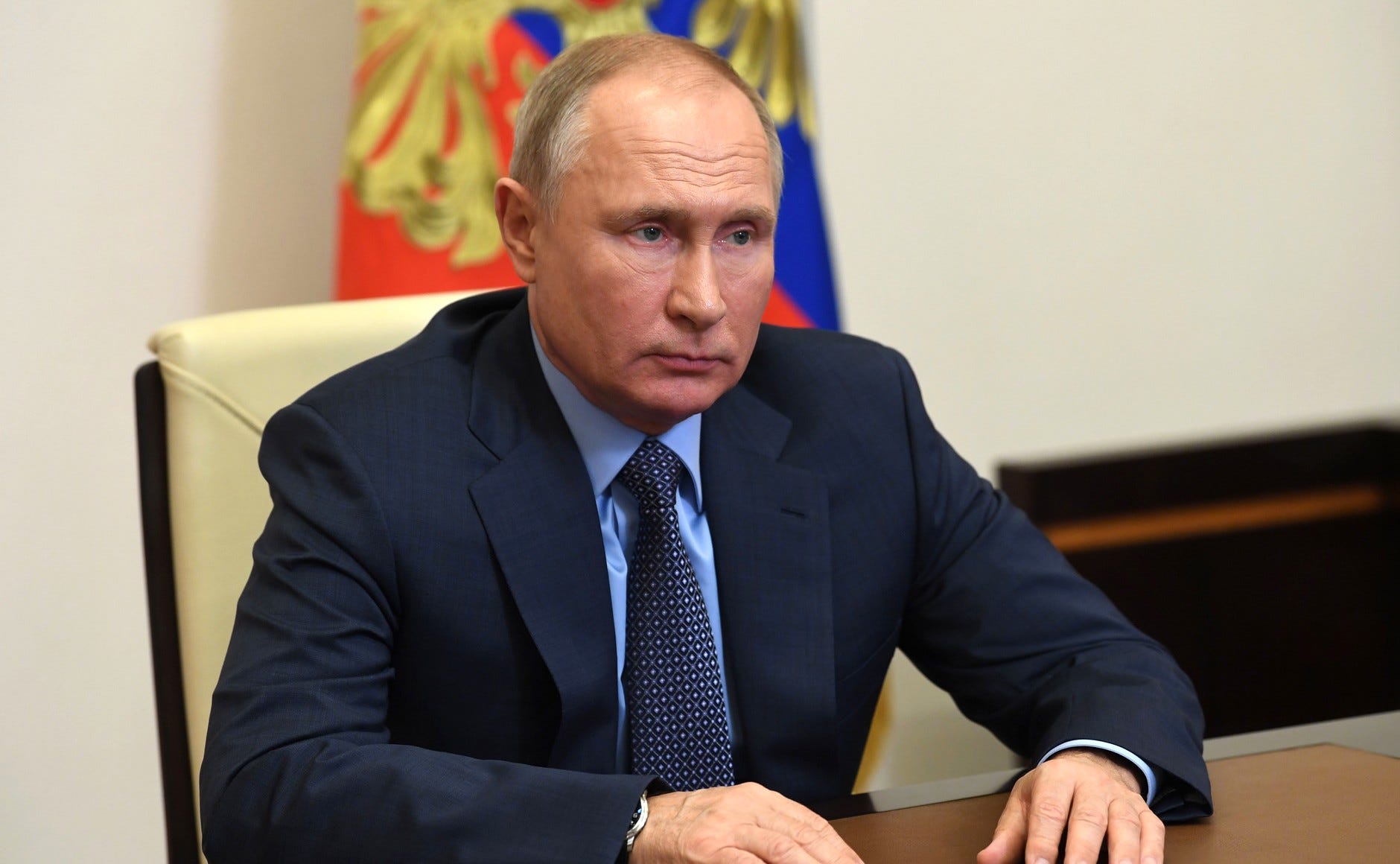
A separate complication concerns the information reaching Putin. Niinistö raises the possibility that he may not receive an accurate picture of the situation because it is shaped by those around him. At the same time, Russian decision-making cannot be reduced to Putin alone, since lower levels of the system also play a role. Nevertheless, Niinistö argues that Putin remains decisive at the top and tends to hold to his position even when those around him think differently.
Taken together, these observations suggest that Russia’s strategic course may be difficult to alter through short-term pressure alone, while Putin’s central role remains important for any effort to manage escalation.
Managing the risk of escalation
Niinistö sees uncontrolled hybrid escalation as a realistic risk. He also assesses that Putin remains deeply angered by European support for Ukraine and that retaliation is likely to remain part of his calculation. Niinistö considers the wider danger particularly serious because the hybrid sphere lacks agreed rules for containing confrontation and managing escalation. He draws a parallel with the nuclear confrontation of the 1950s, when the risks of escalation created a need for dialogue and rules between the opposing sides.
Against this background, Niinistö sees dialogue as necessary to establish agreed limits for hybrid confrontation. Ultimately, he argues that this requires dialogue with Putin himself. The United States should also participate in such a process, although Niinistö identifies a complication: Russia can confine its hybrid activities to Europe, potentially leaving the United States less directly exposed to the confrontation.
Alongside dialogue, the discussion points to a second requirement: a more credible European capacity to respond in the hybrid sphere. Niinistö considers the lack of hybrid capabilities at least as serious as the nuclear deterrence gap being discussed in Europe. Building such capacity is complicated by the legal asymmetry already identified: adversaries may employ unlawful or criminal means, while European states remain constrained by their own legal frameworks.
Concluding thoughts
The discussion highlights a clear distinction between conventional and hybrid deterrence. Even if conventional deterrence prevents military conflict, the hybrid sphere operates under a different and less regulated logic. A country or alliance with a strong conventional deterrent may therefore remain less well prepared for confrontation below the threshold of formal military conflict.
Deterrence depends on perception as well as material capability. European and NATO capabilities can shape Russian risk calculations only if their strength, political cohesion and determination are also visible and credible from Russia’s perspective.
Dialogue is therefore not an alternative to deterrence, but part of managing the risk that hybrid confrontation could escape political control.
The case for NATO’s European pillar follows from changes in the wider strategic environment. Such a pillar is better understood as a hedge against uncertainty than as preparation for a complete US withdrawal. Strategic competition with China may draw US attention away from Europe, even if Washington remains committed to European security over the long term.
The discussion further highlights a tension between opportunism and resistance to change in Putin’s decision-making. The Russian leader appears sensitive to perceived moments of Western weakness, yet comparatively resistant to external pressure once a strategic course has been chosen.
The broader problem, however, is not simply how to deter hybrid activity, but how to prevent hybrid confrontation from spiralling out of control. In the absence of agreed rules, stronger European response capabilities may be necessary but insufficient. Dialogue is therefore not an alternative to deterrence, but part of managing the risk that hybrid confrontation could escape political control. ֍


The hybrid escalation point is especially interesting given how many unexplained drone and other aerial incidents we've been seeing across Europe lately, especially this month. Great read!
'Putin might not get an accurate picture of the situation..'.
One needs to expand on that because: A, it is based on a questionable assessment and ties in w B, on the assertion that other might be familiar w a more accurate picture.
The question here is: who does and why?
The fog of war dictates that both sides use propaganda which is where the media should step in. Well, no need to go into that because almost the complete msm is taking the side of Ukraine, even taking all the 'reports' coming from there at face value while at the same time dismissing everything that comes out of Russia.
So, lesson learned: before you assess, question the reliability of your sources in hindsight and your own biases in particular.