


By Andreas Turunen
Mellenion
Introduction
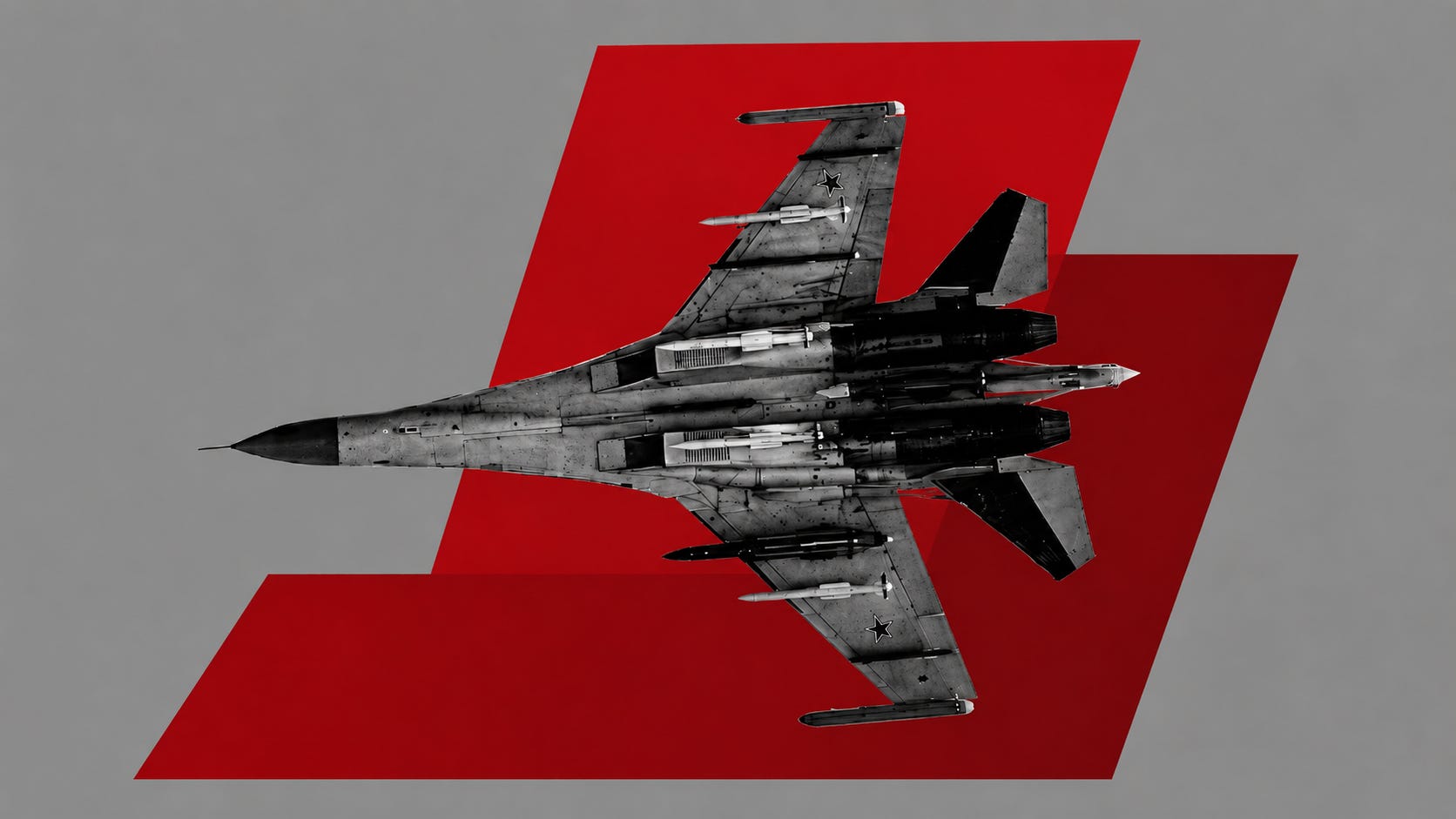
The use of the air-to-air R-37M missile is a known phenomenon in the war in Ukraine, and it has been observed by several analysts who follow the air war closely. In recent comments to Business Insider, the RUSI analyst Justin Bronk noted that the R-37M has become a standard armament on the Su-35S.
Russian military authors have actively been discussing the capabilities of the R-37M, offering a useful window into how Russia sees the development of the air war in Ukraine. Colonel A. Yu. Stepkin, in his Voyennaya Mysl article ‘Tactics of Employment of Aviation Guided Missiles “Air-to-Air” of Long Range in the Course of the SMO’ [1], provides an interesting analytical account of why and how the Russian Aerospace Forces have employed the long-range air-to-air missile R-37M, NATO name AA-13 AXEHEAD, against Ukrainian air targets.
Stepkin not only explains the benefits the missile has provided for the conduct of aerial combat operations in Ukraine. He also appears to offer a candid account of the shortcomings of the Russian Aerospace Forces against the Ukrainian Armed Forces. Voyennaya Mysl is Russia’s most prestigious military journal and, as such, the views and arguments presented there reflect topics considered important to the development of the Russian Armed Forces.
The Application of the R-37M Missile
For the Russian Aerospace Forces, the primary motivation for employing long-range air-to-air missiles stems from the need to overcome Ukrainian advances in aerial warfare. According to Stepkin, the task of destroying Ukrainian air-based systems is shared by two types of units: Quick Reaction Alert (QRA) aircraft stationed at air bases and fighters conducting Combat Air Patrol (CAP). These fighters aim to launch their missiles from inside the borders of the Russian Federation, including occupied Ukrainian territories.
The principal advantage of long-range missile use, in Stepkin’s account, lies in the sudden and unexpected nature of the launches. In his article, Stepkin repeatedly emphasises the difficulty Russian fighter aviation faces in using concealment, owing to the perceived superior Western information and intelligence capabilities provided to Ukraine. Realising the advantage of sudden and unexpected missile launches in practice, however, has required a substantive evolution of tactics over the course of the war.
That evolution began with a pairing that did not last. Stepkin explains that in the opening phase of the conflict, the Russian Air Force relied on the MiG-31BM armed with the R-33 missile to deliver long-range air-to-air fires.
Improved Ukrainian tactics made the pairing obsolete, compelling Russian fighter aviation to adopt the newer R-37M missile carried by the Su-35S airframe. The newer combination is intended to operate within a layered kill chain.
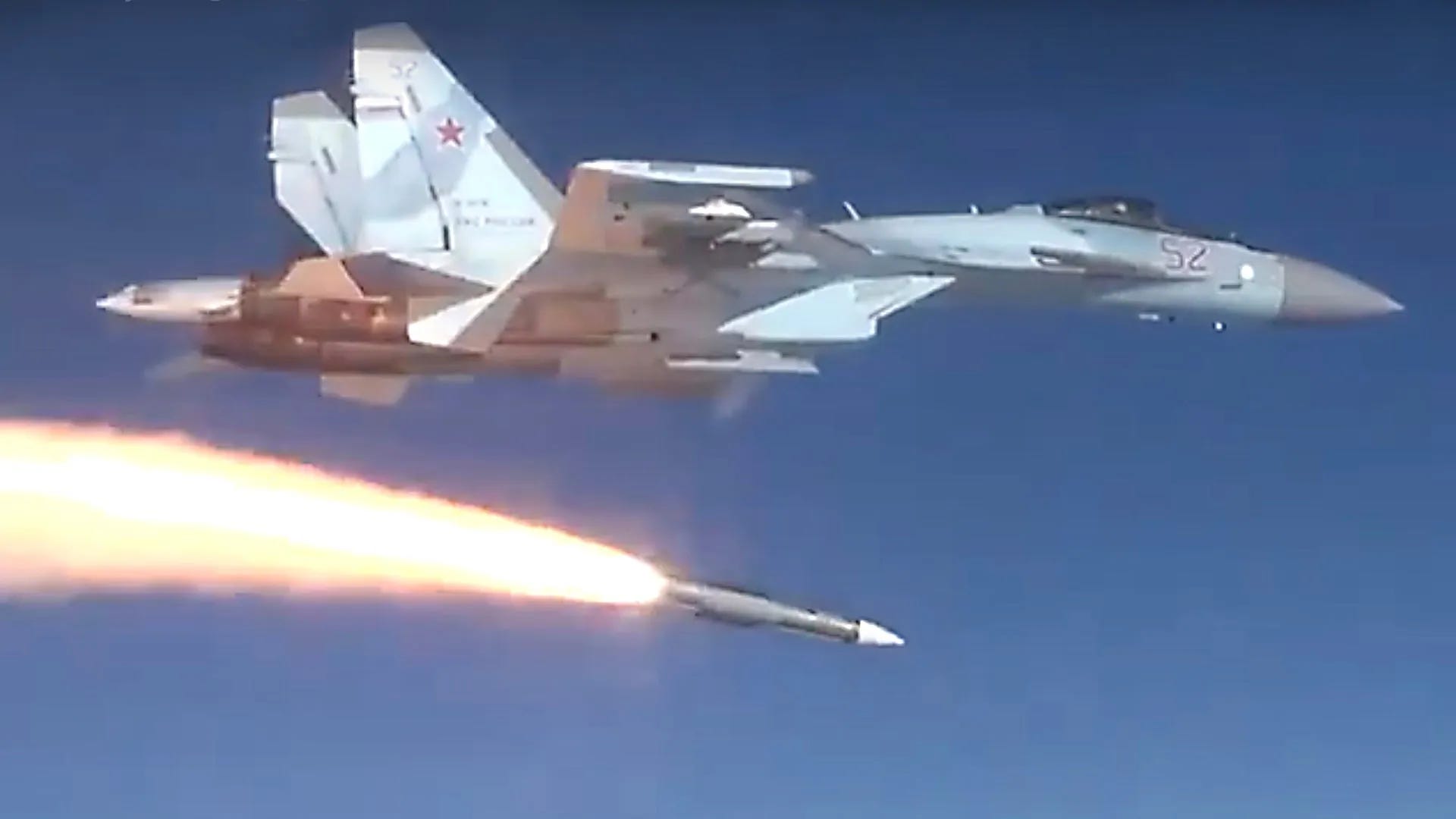
The kill chain of the Russian Aerospace Forces is built around a two-layer approach. Fighters seek to launch their long-range air-to-air missiles before Ukrainian air targets enter the engagement zone of ground-based air-defence troops.
Translating that scheme into consistent operational results has been hampered by shortcomings on the Russian side. Stepkin attributes part of Ukraine’s tactical success to the overtly rigid manner in which Russia has employed its fighter aircraft. Examples include the routine and continuous use of the same airfields, flight routes and three-dimensional flight profiles, which are easy for Ukrainian mission planners to predict.
A second Russian constraint sits at the level of command and control. It is possible to read between the lines of the article that the current C2 system provided by the radiotechnical troops does not maximise the use of the R-37M, owing to the requirement to obtain authorisation for each missile launch. These self-imposed frictions, combined with a demanding external operating environment, are limiting the effectiveness of Russian air combat.
The principal tasks set for the Aerospace Forces’ fighter aviation in the war are the destruction of air targets and the provision of air cover for ground troops against air-launched munitions.
The completion of these tasks by the Russian Aerospace Forces is limited by four factors: large-scale Western military assistance to Ukraine; the effectiveness of Ukrainian ground-to-air defence systems of both Soviet and foreign origin; the reconnaissance capabilities Western countries provide to Ukraine; and the limitations of the Aerospace Forces’ own reconnaissance-information support. Of these four, the reconnaissance imbalance between Russia and Ukraine receives particular weight.
Stepkin notes that one of the most significant factors in air combat in Ukraine has been the intelligence support provided by Western countries to Ukraine. He suggests that Western intelligence and reconnaissance assets can reveal air-to-air missile launches by Russian fighters against Ukrainian air assets, and that the West is capable of supporting Ukrainian command and control by conveying significant information about the actions of Russian Aerospace Forces units.
Ukrainian air-defence tactics have shifted from stationary, location-bound air defence to ambush-type employment that exploits concealment and mobility. This has created problems for the Russian fighter employment.
The inferiority of Russia’s reconnaissance systems relative to Ukraine’s, Stepkin contends, does not allow the Russian Armed Forces to locate Ukrainian air-defence systems. This, in turn, reduces the employability of Russian Air Force’s fighter assets close to the front line. He adds that Ukraine’s current pattern of air-defence employment complicates the use of fighters, owing to the difficulty of estimating the ranges and capabilities of Ukrainian air-defence systems.
Ukrainian fighter aviation, meanwhile, has adapted directly against the long-range missile itself. The specific shortcoming Stepkin highlights is Ukraine’s ability to shift the counter-air engagement from forward to rear-hemisphere interception, which halves the effective range of the R-37M and lowers the probability of a kill.
Analytical Thoughts
For Western audiences, Stepkin’s account indicates that Ukraine has been successful in posing challenges to the Russian Aerospace Forces. Ukraine has been able to increase the capability of its Air Force and implement Western technology, techniques, tactics and procedures.
From a Russian perspective, Stepkin offers novel material on R-37M employment and tactical considerations. His account suggests that the Aerospace Forces have a willingness to evolve not only their technical applications, but also the wider tactics and procedures of air combat.
The primary argument that emerges from his account is that Russia conducts innovation reactively and under structural disadvantage. He depicts the Russian Aerospace Forces being consistently a step behind Ukraine that enjoys technological and informational superiority provided by its Western partners. The framing is broadly dialectical: the Russian side is constantly reacting to Ukrainian adaptations, which it follows and analyses closely.
Finally, Stepkin is unusually candid about the internal factors that constrain Russian combat capability. He sets out a list of shortcomings, together with the changes required in both operational conduct and technical application to overcome them. On his account, there is a doctrinal gap that prevents the R-37M’s full technical potential from being realised. ֍
